The Man Who Never Gets Lost
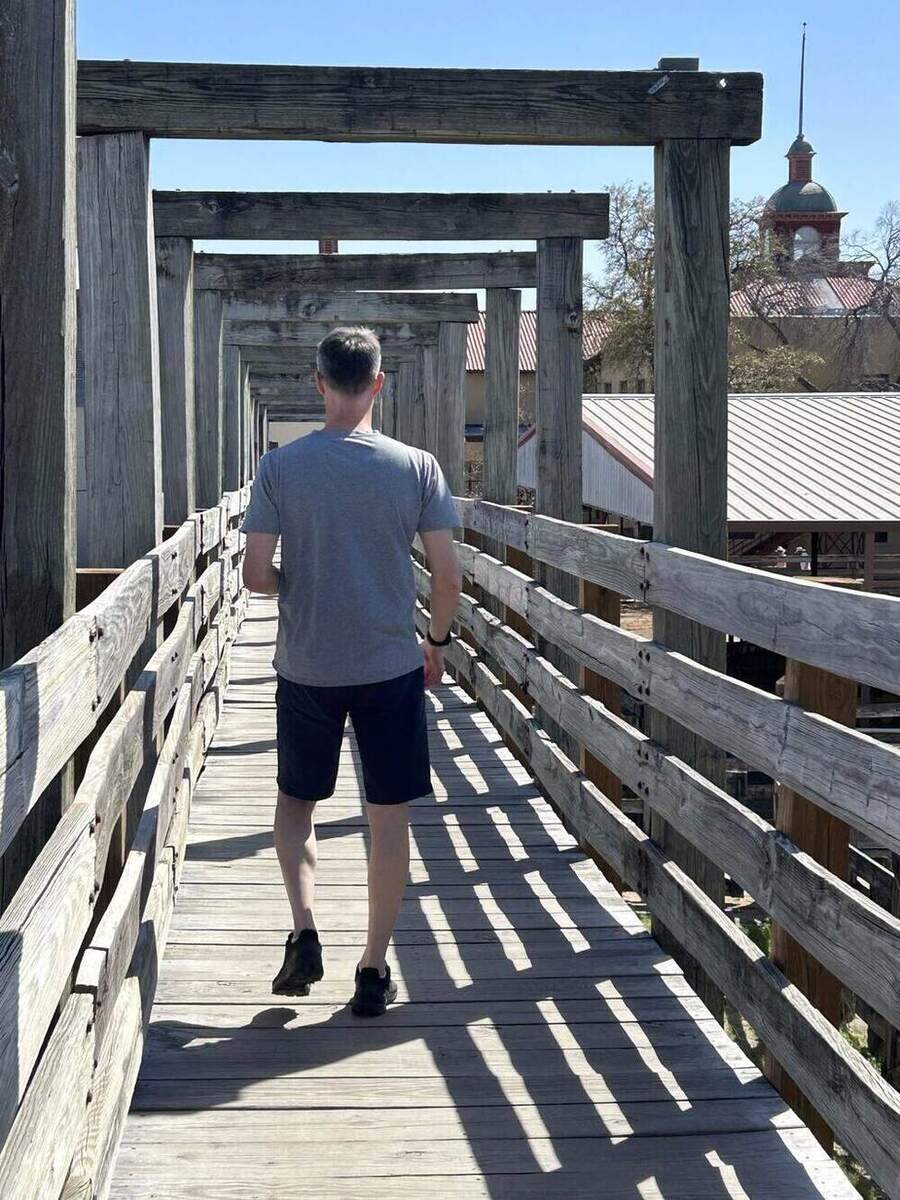
Larry does not get lost. This is the first thing you need to understand.
Orienteering: a timed race through unfamiliar terrain with only a map and compass. You choose your own route.
He has orienteered since high school. He races his age category. He has a memory for landscape that borders on unsettling: a place flashes on TV for a tenth of a second and he’ll say, "that’s Newcastle Island," and he’ll be right. At a dinner once, friends showed us a photo of their yard. We had never been to their house. Larry looked at it and named their street. I hit his arm and whispered that they were going to think he was a stalker. He was right about the street.
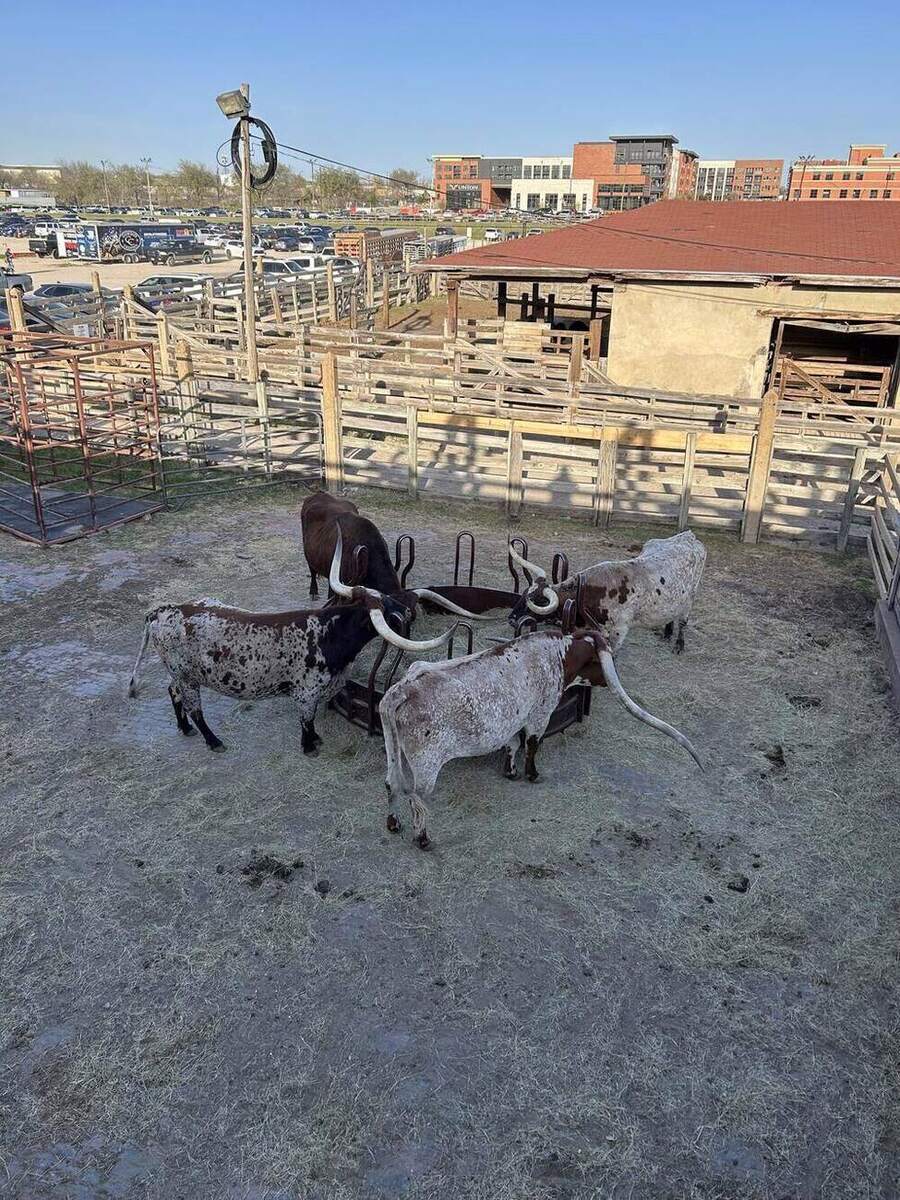
So when we were in Fort Worth for a national ranking event, standing at the Stockyards about a hundred feet from a parking lot we had used that same afternoon, and Larry insisted the lot was to the right when it was very plainly to the left, I did not think "hmm, interesting." I thought he was punking me.
We had come back from the exact opposite direction we’d arrived from earlier. I said left. He said right, and he wasn’t teasing. He was baffled. In his own words: his brain had been there, knew the surroundings, and had the whole thing flipped a complete one-eighty from where the parking lot actually was. He was certain. And he was certainly wrong. Being wrong about geography does not happen to Larry.
We nearly had a fight about it, which is also not who we are. I was frustrated because the best navigator I know suddenly couldn’t process something a hundred feet in front of us, and the only explanation I could come up with was that he was messing with me.
He wasn’t. It was dyslexia. Mild, lifelong, and undiagnosed, and neither of us knew it yet.
Talking it through afterward, Larry looked back across years of orienteering and saw the pattern for the first time. His errors clustered around parallel features: roads, paths, trails, anything that runs in a straight line. Reading the map at speed, his brain would tell him he was on one side of the trail when he was actually trying to be on the other. It had cost him races. It had gotten him properly lost. It had produced some deeply frustrating afternoons in the forest. And until a parking lot in Texas contradicted forty years of being right about where things are, there was no reason to question it.
The lesson we took from that parking lot is the same one we teach organizations now.
Larry’s dyslexia is mild. It shows up when he’s rushing, exactly when speed and accuracy both matter, which is orienteering in one sentence. Before he could name it, it was an invisible saboteur. Now that he can name it, it’s a known condition on the course. When something isn’t adding up, when the terrain and the map start arguing with each other near a road or a trail, he can say to himself: you can be dyslexic in situations like this. And then he checks, and works his way out of it. The mistake still knocks; it just doesn’t get to drive anymore. The hardest part was never the dyslexia; it was the not knowing. And the difference knowing makes is measurable: getting lost used to cost him fifteen minutes. Catching the error costs him fifteen seconds. In a race, that’s everything.
Nothing about his brain changed. The only thing that changed is that he knows.
The same gift works on my side of the car. Since my diagnosis, self-awareness lets me question my own weather. Is it reasonable to assume everyone in that meeting thought what I just said was stupid? Probably not. That’s probably rejection sensitivity talking, not reality. And Larry, the shockingly neurotypical one, has a coaching line he uses on me regularly: you don’t have to believe everything you think. It is one of the biggest gifts anyone has ever given me.
That’s the whole argument for neuroinclusion, told in one parking lot. One of us was diagnosed with ADHD at 49. The other figured out his dyslexia because of a parking lot at the Fort Worth Stockyards. Both of us spent decades succeeding anyway, without the names, without the understanding, occasionally wondering why certain things were harder than they should have been. The names didn’t limit us. The names gave us the manual.
And the same brain that flips parallel features is the brain that recognizes Newcastle Island in a tenth of a second. That is not a coincidence and it is not a consolation prize. It’s the same machinery. You don’t get to keep the gift and return the glitch; they come as a set, in your colleagues and in yourself.
And one more thing, because Larry insists on accuracy: he is, in every other way, the most neurotypical person I know. Shockingly neurotypical. Poster-boy neurotypical. Executive function for days, plans that hold, a calendar that obeys him. That is exactly why this matters. If the most organized, most capable brain in the room can carry one quiet thread of mild dyslexia for forty years without anyone noticing, including him, then "neurotypical" and "neurodivergent" aren’t two kinds of people. Every brain has its own map, and most maps have at least one surprise on them.
Look at that. The ADHD one and the shockingly neurotypical one, and we both had things to learn about our own maps. And we run a company whose whole job is reading maps and finding the way.
Contour North’s neuroinclusion sessions are led by an ADHD facilitator, and informed by lived experience on both sides of the firm. Larry, our co-founder, went forty years before his mild dyslexia was named. We teach what we live: naming it changes everything, late discovery is common and okay, and the flaw and the strength are usually the same trait.
Stories first. Always free.
Field Notes is our occasional newsletter: one true story, one practical tool, one thing we’re seeing. No pitches disguised as insights.