The Sweater
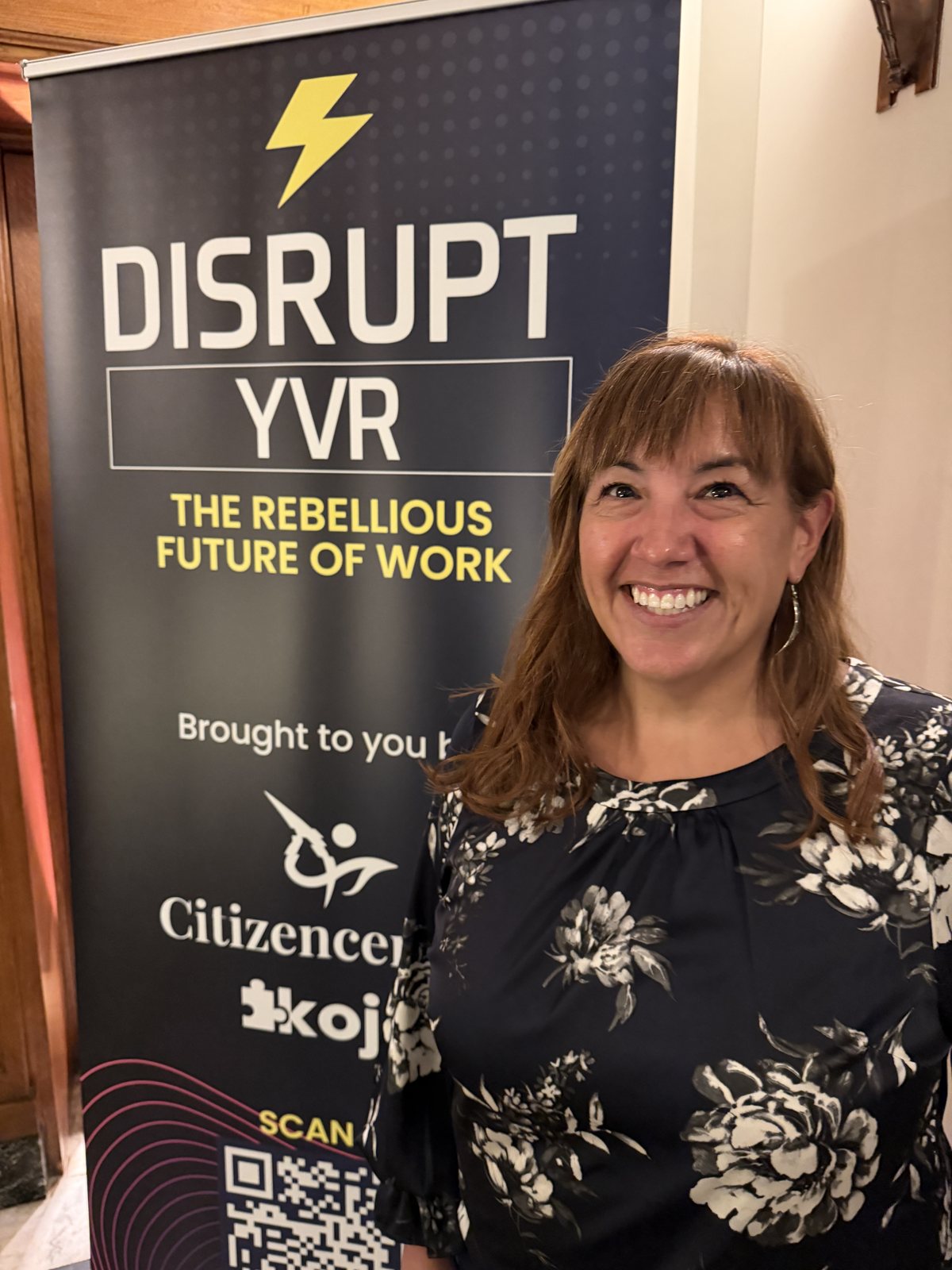
On November 12, I gave a five-minute talk at Disrupt YVR 12.0, Vancouver’s edition of DisruptHR, co-organized by Citizencentric and Koja Consulting and held at The Vancouver Club. Twenty slides, fifteen seconds each, advancing whether you’re ready or not. For someone who talks as much as I do, that alone was a stretch goal.
I was nervous all evening, and once I was on stage I was shaking. I lost words in the middle. On slide eleven, I cried.
The slide says She left me flying solo. ADHD and menopause. "She" is estrogen. More on her later. The plan was to say "Surprise," get the laugh, and then give that room the line the whole talk was built around: "Nobody knows what to do with both. Not my doctor, not HR. And I am HR."
I never got to the laugh. On the screen behind me, the warning panel lit up: Master Caution, Fuel Low, and then two lights I’d labelled myself, ADHD and Menopause. And I was back in that stretch when I had both at once, couldn’t explain it to anyone, and carried it alone. I honestly can’t remember if I got that line out. So, for the record: nobody knows what to do with both.
Menopause tears don’t book ahead. Mine picked a stage, a microphone and 250 witnesses, with the slide timer still running.
I knew crying was a risk. I’d cried more than once just practicing, and I’d told my coach, Jeremy Long, that if it happened on the night I’d simply accept it. He said I’d be fine, and that the message was powerful.
Larry saw it coming. Earlier that evening we’d been sitting on a couch next to the photo booth. He asked if I had my Loops, the Loop earplugs I wear when it’s loud. I didn’t. He asked if the noise was getting to me. I said no. Looking back, I think my nervous system had spent the whole evening soaking up noise and people, and it was already rattled by the time I took the stage. If I’d spoken earlier in the lineup, maybe I wouldn’t have cried. But the crying was powerful, so who cares.
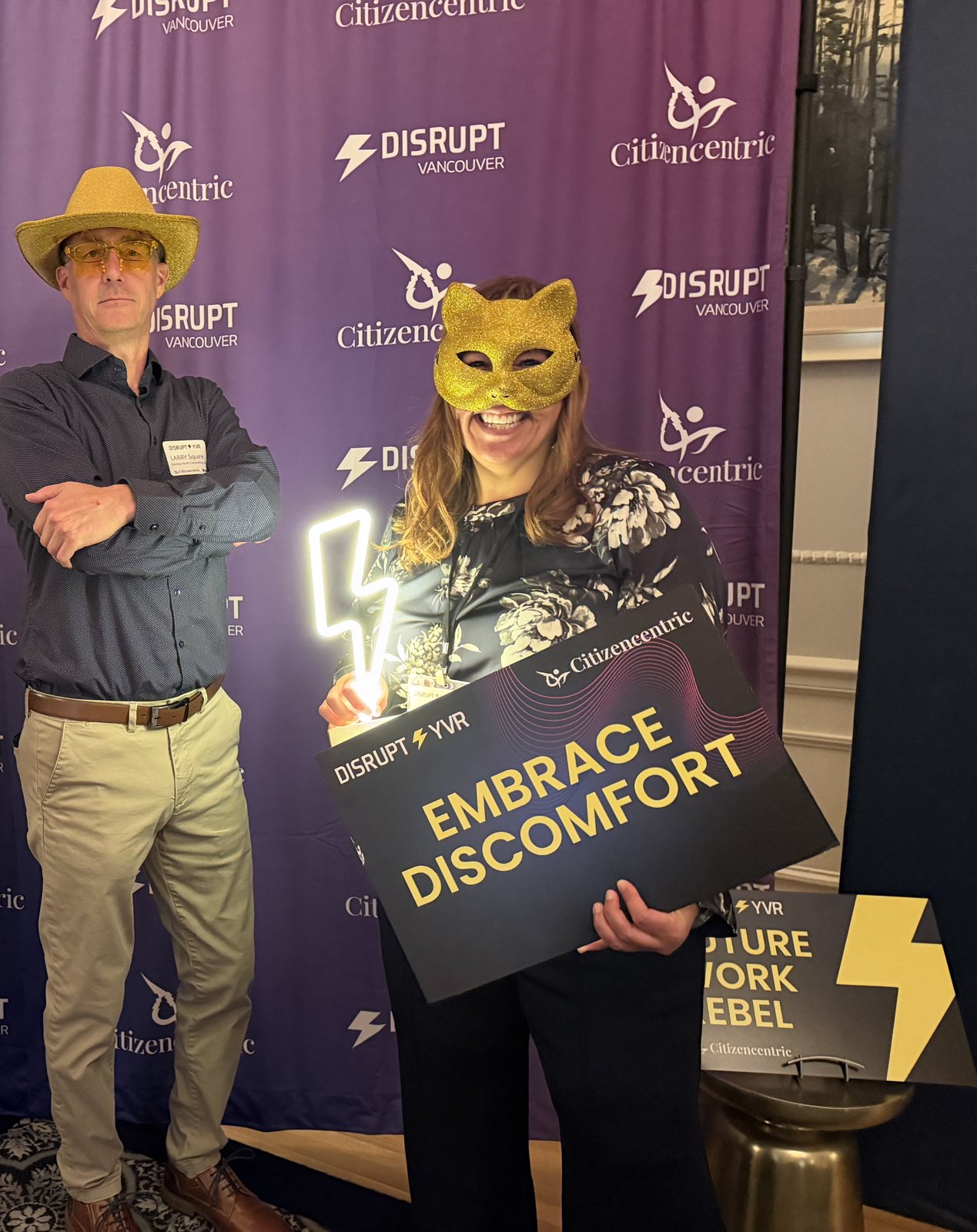
The room was so supportive. I could feel it in the way they waited for me to carry on. Thank you, every one of you. ❤️ I found the next line, the slides kept moving, and I got to the end. Afterwards people kept stopping me to say thank you. Women said they felt seen. Men said it was a powerful message. The room watched a capable woman lose her words mid-sentence and find her way back. That was the talk. I just didn’t plan to demonstrate it.
Thank you to Citizencentric and Koja Consulting for building a room like that, and to sponsors The Vancouver Club, CPHR British Columbia & Yukon, KIRAH and Good Company Lager. Here’s what didn’t fit in five minutes.
Everyone noticed before I did
Twenty-eight years in HR, watching for the moment someone isn’t coping, and I was close to the last to spot it in myself.
The first sign was a December business trip to Calgary. I was walking to work, alone in another city, crying for no reason I could find, with the tears freezing on my face. I called Larry and said, "I’m walking to work and I’m crying and I don’t know why." It scared me. Then came an irritability I couldn’t see in myself. Larry could, and he was brave enough to suggest I talk to a doctor.
Then the sweater. On a video call, I was so hot I’d aimed a desk fan straight at my face, and a minute later I was cold enough to want a coat. On, off, on. I owned fans, plural. A colleague finally said out loud what fourteen people were watching. Nobody laughed, and I was too busy performing "fine" to laugh myself.
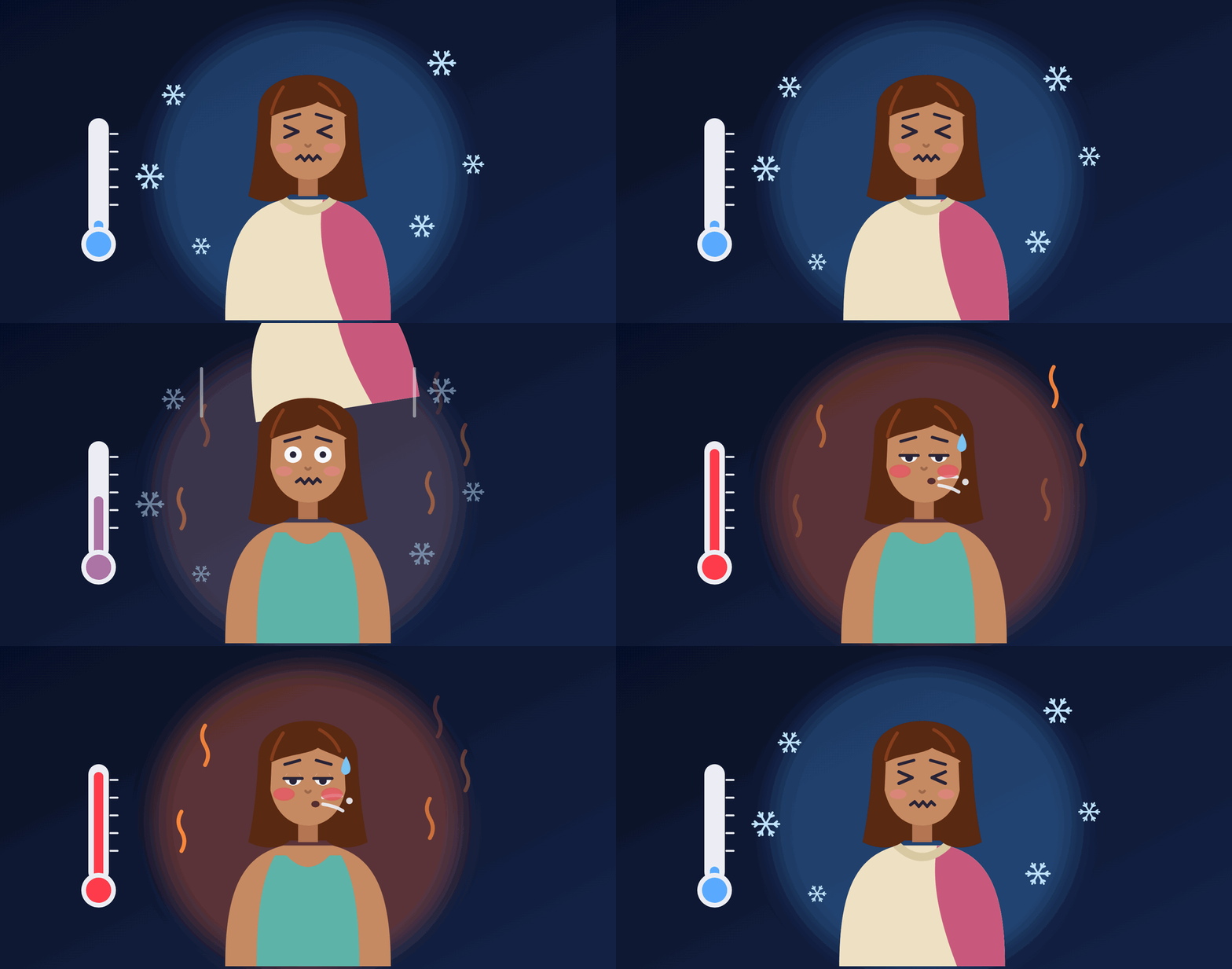
Everyone noticed something. Nobody, me included, had the word for it. A search engine eventually told me I was probably not dying, and offered perimenopause, or maybe menopause. My doctor wasn’t sure either.
The woman with the report cards
The conversation I keep thinking about happened after I came off the stage. A woman came up and read me her own report cards. When she finished, she said she felt seen, and that it had all been right there, all along.
Mine say it too. In teacher handwriting, from kindergarten on: "continues to work on self-control," "difficult to settle down to a task," "chats too much in class," and my favourite, from my music teacher, "when alone, an enjoyable girl." In my school photo I’m about six, grinning, in a turtleneck sweater. It was always going to be a sweater.
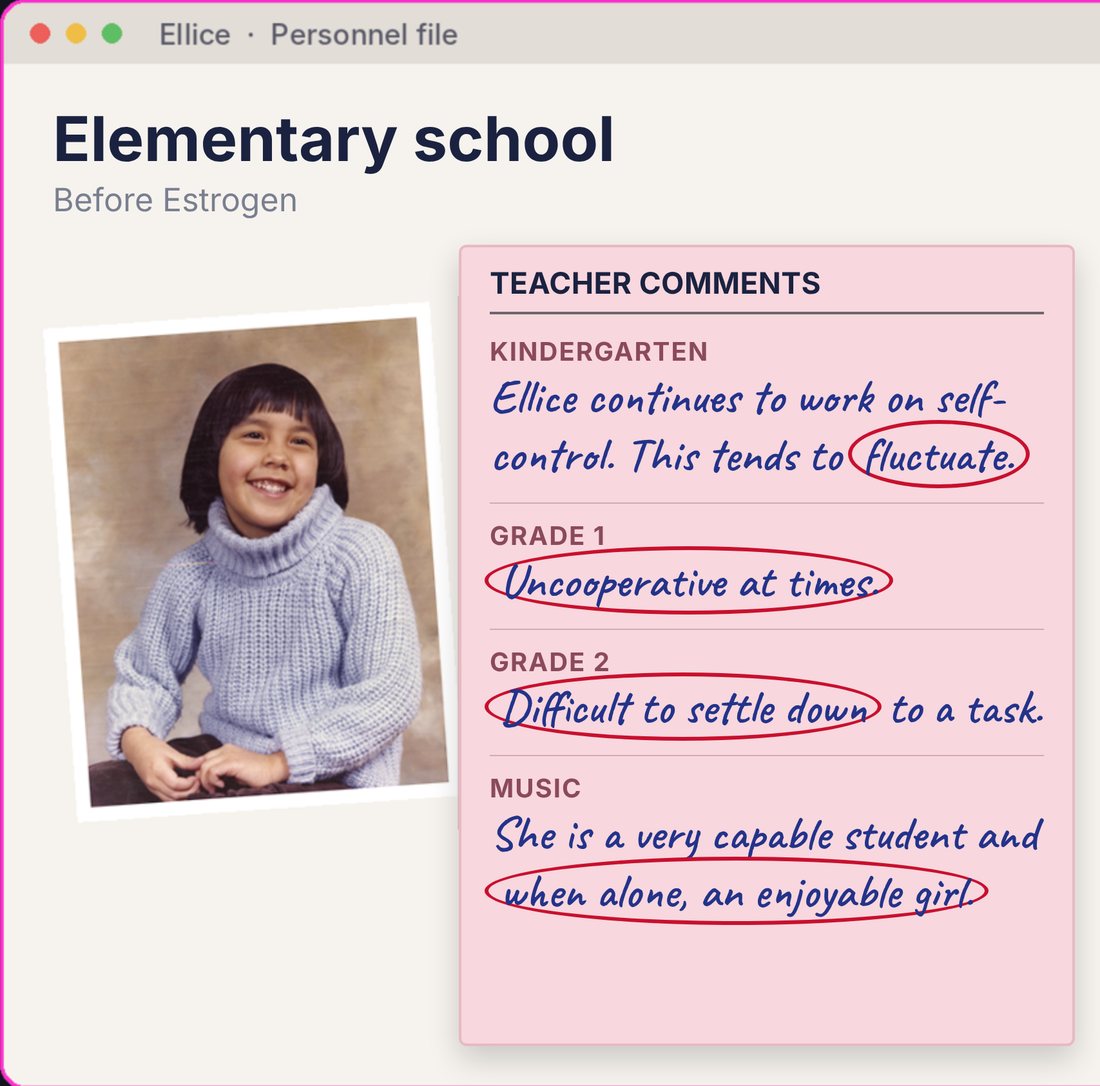
I wasn’t diagnosed with ADHD until I was 49. In one way, that’s right on time. So many women my age are telling me they’re only now getting diagnosed, in their forties and fifties, often just as perimenopause makes it impossible to ignore. In another way, it’s about forty years late, because the signs were already in my kindergarten report card. Every time I tell this story to women around my age, more of them see themselves in it. The next question is always the same: why wasn’t it caught?
For decades the picture of ADHD was a hyperactive little boy, and a chatty, daydreaming girl didn’t match it. Many of us learned to mask. And some of us, I think, had help we didn’t know about. (Larry got his own late name, a mild dyslexia, in a parking lot in Fort Worth. Late names run in this house.)
The question about dopamine
The help is estrogen, and it’s what another woman asked me about afterwards. I told her what I’ll tell you: the science is young, and I can only speak from my own experience.
The way I make sense of it, estrogen was the best worker I ever lost. She ran the thermostat, kept the filing in order, covered the night shift, and quietly took care of a good share of my ADHD. Estrogen seems to help my brain use dopamine, the same chemical messenger many ADHD medications work on. I got three degrees and a board seat at 27 without ever knowing she was on the payroll.
When she started clocking out, the ADHD I’d learned to manage got loud again. Researchers are starting to look at this. A 2025 study of more than 5,000 women in Iceland, aged 35 to 55, found that 54% of those with an ADHD diagnosis reported severe perimenopausal symptoms, compared with 30% of those without one. The women living it are well ahead of the research.
Three years early
As a kid I tried everything: soccer, skiing, swimming, diving, gymnastics, ballet, tennis, horseback riding, track. In track and field I just did whatever they needed someone for. Looking back, that’s ADHD too. I always needed to be moving. I’m not that athlete anymore. I have severe arthritis in my knees. Going up a hill is fine. Coming down is the problem.
That matters in orienteering, where you race with a map and compass through terrain you’ve never seen. Orienteering races come in three standard distances: sprint, middle and long, and the events I race usually run all three, in that order. The middle is usually the most technical. The long is less technical but the most physical, with the most distance and the most climb. By the time I get to the long, my knees have usually had enough, and I can rarely finish it.
It’s also one of the most inclusive sports I know. As the age classes get older, the courses keep the hard map reading, but the distance gets shorter and the climb gets gentler. When I started in 2020, I raced on beginner courses alongside kids, cheerfully saying "let’s go find the next control." These days I usually race on the courses set for much older classes, alongside 80- and 90-year-olds who read a map better than almost anyone. One man in my club is 92 and often faster than me.
In 2024 I set a goal out loud, on the internet: race in my own age category by 55. My age class means the full technical course, plus more distance and a lot more up and down. Getting there meant two kinds of work. I had to build my knees up for the climbs, and especially the descents. And I had to learn the technical navigation, which takes exactly the kind of focus my ADHD makes hard.
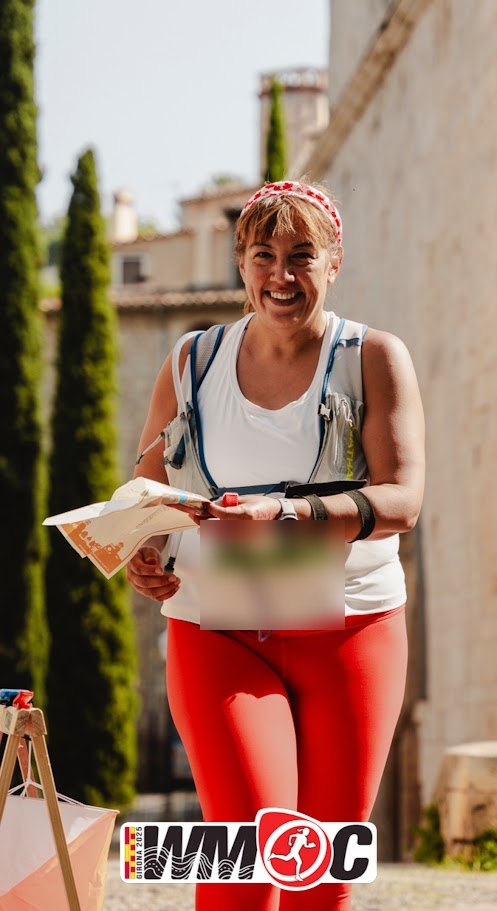
In August 2025, at 52, I raced all five races at the World Masters Orienteering Championships in Girona, Spain. I came 41st of 42 in the W50B middle final. I also reached one start four minutes late, and the story is pure ADHD. I was sitting near the start, early and pleased with myself. I’m pretty sure I even posted a video saying look, I’m early, and pointed at the late-start chute like I’d never need it. Then I went up at my start time, except I’d read my middle start time instead of my sprint one. I’d missed my start, and went through the late-start chute after all. Honestly, it felt like being a VIP, ushered past all the racers to the front. In the long final I called it in the heat and skipped controls. Goal smashed, and not last.
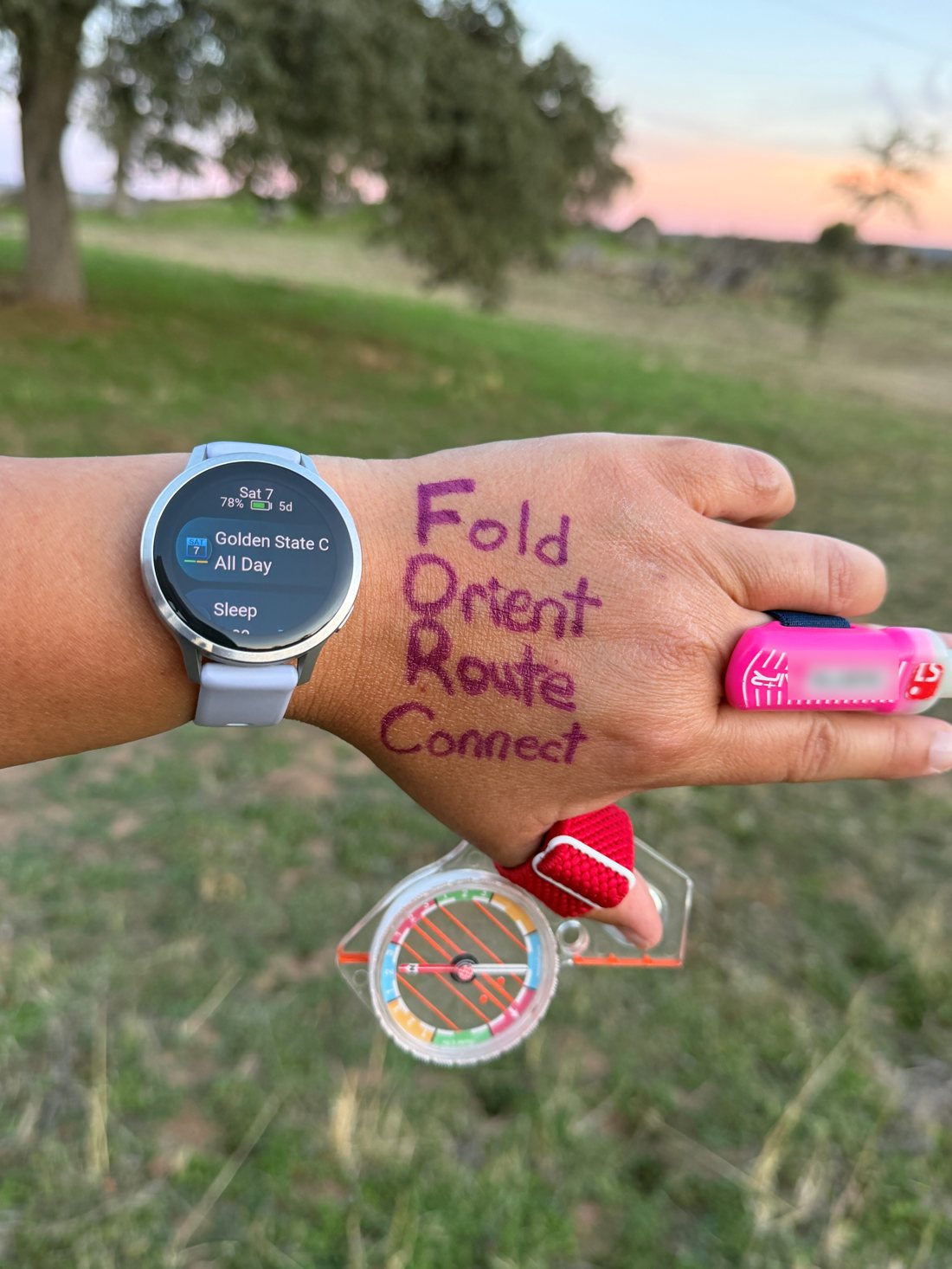
My accommodation in the forest is four words written on the back of my hand: fold, orient, route, connect. It cost one Sharpie.
So please don’t tell me women like me are declining. The sweater and Spain were the same year. Women my age quietly work around it: the fans, the lists, the notes on our hands, the extra hours. We pay for it ourselves, so the workplace never sees what it costs.
How we lose them
At work there’s no Sharpie. You lose a word, then you lose the room. Your ideas get moved to "let’s take that offline," and over time, so do you.
Nothing gets written down. No performance file, no case. The phrase people use is "she’s not herself," and it gets said in a one-on-one or a hallway, never in a review. When it was me, I didn’t go quiet. I blamed myself.
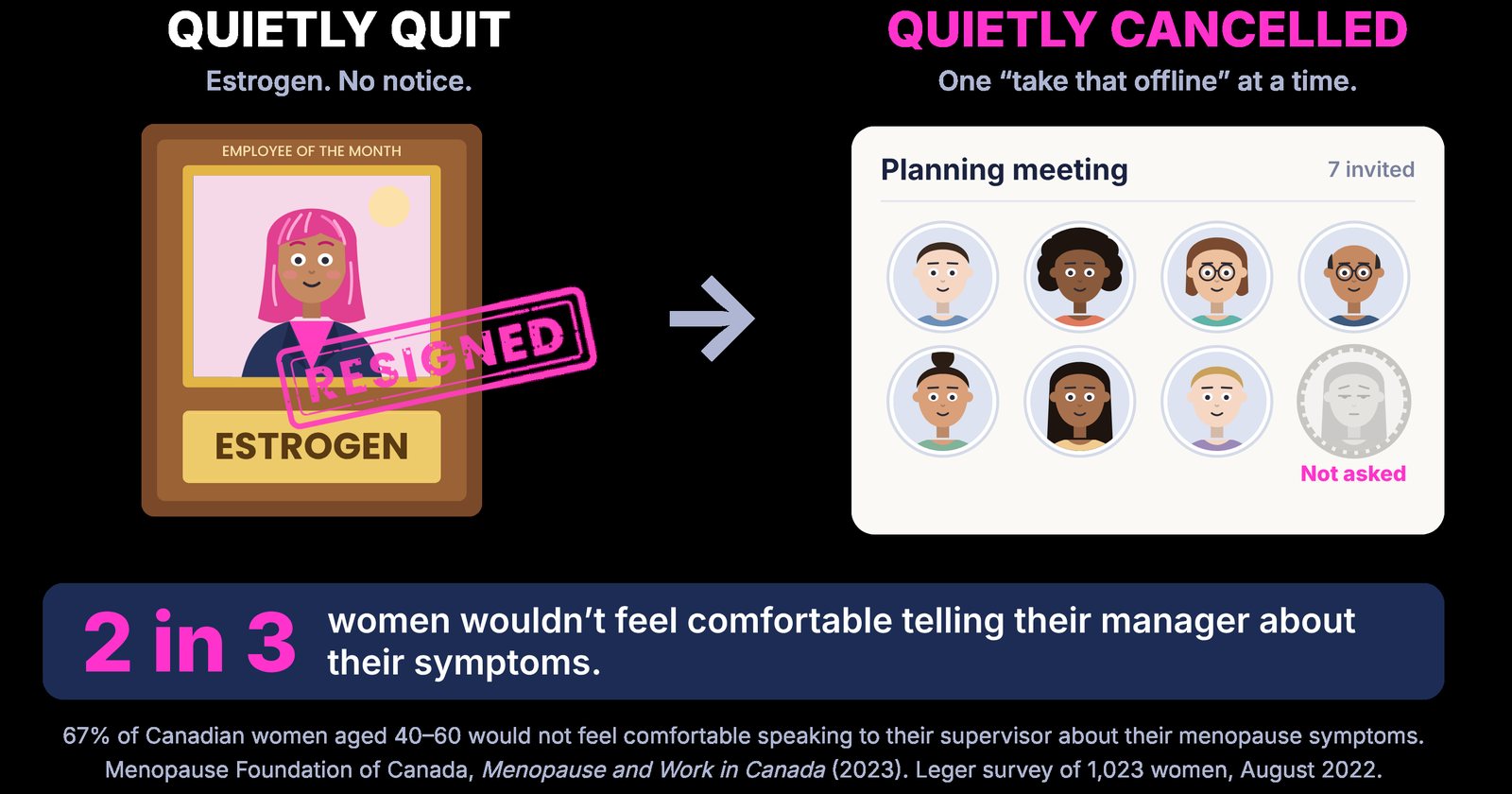
I call it quiet cancelling, and I say "we" on purpose, because it comes from both directions. Some of it we do to ourselves. We lose confidence, blame ourselves, and stop putting our hand up for the big project. Some of it is done to us. The meeting invites thin out, or you’re still in the room but no longer in on the decisions. Either way, estrogen quietly stops covering, the woman she was covering for gets quietly cancelled, and it gets called her fault.
Nobody owes anyone a diagnosis, and no system needs a label for this. Menopause is private. What’s missing is someone noticing the change and asking.
The Menopause Foundation of Canada found that two in three Canadian women aged 40 to 60 wouldn’t feel comfortable talking to their supervisor about their symptoms. So she’s probably on your team, and she probably won’t bring it up. You paid for decades of her judgment, and losing her this way writes it off.
Perimenopause then, menopause now
Looking back, the earlier signs were probably perimenopause: hormones up and down like a rollercoaster, usually starting in your forties, sometimes earlier. By the time of the sweater, I was probably into menopause, when the rollercoaster settles at a steady low. Nobody could say for sure, not even my doctor. Some symptoms didn’t read the brochure and stayed for years.
Hormone therapy helped me. It helped my sleep, the hot and cold flashes, and my mood. Larry would like it on the record that he noticed the mood part first. It’s a personal choice, and one to make with your own doctor. This is my experience, not medical advice.
I say "women" because it’s my story. Menopause also happens to many trans men and non-binary people, and to people whose menopause arrives overnight when both ovaries are removed, or with cancer treatment, sometimes in their thirties. Some women sail through it with barely a ripple. Every version is real.
If it’s you
Write down what you’re noticing, with dates. Take the list to your doctor and ask about perimenopause, and about ADHD, by name. And know that you can ask work for what would help. You usually don’t have to name a diagnosis, though they may ask for a doctor’s note about what you need.
What to do when you see the sweater
Ask, don’t guess. "She’s not herself" is a guess. "What’s wrong?" puts her on the spot. Try "what would help?", in private, and then mostly listen. Agree on one change and check back in two weeks, because the first answer is rarely the last one. If she says she’s fine, take her word for it and leave the door open. You never have to say the word menopause.
Watch for a change from her normal: lost words, more small mistakes, less patience, 3 a.m. emails, last-minute sick days, the camera off, a pass on the big project she’d normally fight for. Signals, never a diagnosis.
Say yes to small things. A fan, or a seat by the window. Earplugs for the loud days. Agendas sent early and decisions confirmed in writing, so a lost word doesn’t cost her the meeting. A flexible start on the bad-sleep days. In US data from the Job Accommodation Network, 61% of workplace accommodations cost nothing at all, and when there was a one-time cost, the median was $300.
Know the law. Canada has no menopause-specific law. But menopause symptoms that are disabling can trigger the duty to accommodate under human rights law. And if you knew, or ought to have known, that a change in someone’s work might be linked to a disability, you may have a duty to ask before you discipline or dismiss. If you’re unsure about a specific case, talk to an employment lawyer.
Two words
I closed the talk with the shortest question I know. Next time you notice the sweater going on and off, find a private moment and ask. Anyone can, not only her manager:
"You ok?"
Contour North’s sessions on menopause, ADHD and the workplace are led by a facilitator who lived it: perimenopause, then menopause, and a late ADHD diagnosis, while racing at a world championship and working in HR. We teach what we live. Late discovery is common and okay, and the fix usually starts with one good question.
- Menopause Foundation of Canada, Menopause and Work in Canada (2023), sponsored by Sun Life. Leger survey of 1,023 Canadian women aged 40 to 60, August 2022.
- Jakobsdottir Smari et al., European Psychiatry (2025). SAGA cohort, 5,392 women aged 35 to 55, Iceland.
- CIPD, Menopause in the workplace: Employee experiences in 2023 (UK, n=2,185), for the signals list.
- Job Accommodation Network, Costs and Benefits of Accommodation, US employers 2019 to 2024.
- ISO 45010:2026, Occupational health and safety management: Menstruation and menopause in the workplace: Guidance (September 2026).
- Duty to inquire, for example Calkins v Broadview Homes (Alberta) Ltd., 2023 AHRC 45 (an Alberta decision; persuasive, not binding, in BC).
- Perimenopause and menopause basics: Cleveland Clinic, HealthLink BC, Mayo Clinic, Menopause Foundation of Canada.
- Race results: IOF Eventor, WMOC 2025 Girona, W50B.
Stories first. Always free.
Field Notes is our occasional newsletter: one true story, one practical tool, one thing we’re seeing. No pitches disguised as insights.